
It rarely starts as sudden hair loss. It starts quietly — a wider parting, a ponytail that feels thinner than it used to, hair that doesn't have the density it once had. Many women describe it as "my hair is still there, but it's not the same."
This is far more common than most people realize. Female pattern hair loss affects up to 30 million women in the US, and the American Academy of Dermatology reports that by age 40, roughly 40% of women have begun experiencing some degree of hair loss. Here's what's actually driving it, decade by decade, and what genuinely helps at each stage.
The Main Cause: Female Pattern Hair Loss
The most common cause of hair thinning in women at any of these ages is female pattern hair loss (also called androgenetic alopecia). It's driven by genetics and by hair follicles' sensitivity to androgens — hormones like testosterone and DHT that women also produce in smaller amounts.
Unlike male pattern baldness, women almost never go fully bald. Instead, follicles gradually miniaturize — hair grows back progressively finer and shorter each cycle, mostly noticeable at the crown and along the part line, rather than a receding hairline.
It can technically begin as early as the late 20s, but most women don't notice it until their late 30s through 50s, as the underlying process is gradual and often invisible for years before it becomes visually obvious.
Your 30s: The Hormonal Shift Nobody Warns You About
Hair thinning in your 30s is often dismissed — "too young for menopause, too old for postpartum" — but the hormonal changes that affect hair don't wait for menopause. They can begin in the mid-to-late 30s.
What's typically happening:
- Early hormonal fluctuation — estrogen and progesterone levels begin shifting years before perimenopause officially starts
- Postpartum overlap — if you've had children in this decade, postpartum telogen effluvium can mask or compound an underlying hormonal thinning pattern
- Stress amplification — chronic elevated cortisol doesn't cause female pattern hair loss on its own, but it can accelerate the progression in women who are already genetically susceptible
- PCOS — women with polycystic ovary syndrome are at higher risk of earlier-onset thinning due to elevated androgen levels
If you have a family history of female pattern hair loss, this is often when the earliest, subtlest signs appear — which is also the best time to start supporting scalp health, before more follicles miniaturize.
Your 40s: Perimenopause Enters the Picture
This is when most women first notice thinning clearly enough to search for answers. Perimenopause — the transitional years before menopause — brings more significant estrogen decline, and estrogen plays a direct role in hair health: it helps keep more follicles in the active growth (anagen) phase for longer.
As estrogen drops:
- Fewer follicles stay in active growth at any given time
- The relative effect of androgens on follicles increases, since estrogen was partly offsetting it
- Hair can become finer in texture, not just less dense
- Thyroid changes, which become more common in this decade, can independently contribute to thinning — worth ruling out with a simple blood test
This is also the decade where nutrient deficiencies (iron, vitamin D, protein) become a more common compounding factor, since absorption and dietary habits often shift with age.
Your 50s: Menopause and the Estrogen Cliff
Menopause brings the sharpest hormonal shift — estrogen production drops to a fraction of its previous level, and the androgen effect on hair follicles is no longer offset at all. This is when female pattern hair loss tends to become most visually noticeable, with continued follicle miniaturization, earlier shedding cycles, and visible thinning at the crown.
This is also the decade where it's most important to rule out other causes before assuming it's "just menopause" — thyroid disorders, iron deficiency, and certain medications all become more common at this life stage and can compound hormonal thinning.
Free Download
The 30-Day Scalp Detox Checklist
A daily and weekly routine that supports scalp health at any life stage.
Get the Free ChecklistOther Causes to Rule Out at Any Age
Female pattern hair loss is the most common cause, but it's not the only one. Before assuming that's what you have, it's worth ruling out:
- Telogen effluvium — temporary, diffuse shedding triggered by a major stressor (illness, surgery, extreme stress, rapid weight loss), usually starting 2-3 months after the trigger and resolving on its own
- Thyroid disorders — both an underactive and overactive thyroid can cause hair thinning; a simple TSH blood test can rule this in or out
- Iron deficiency / low ferritin — one of the most common deficiencies in women, and a well-documented contributor to hair shedding
- Traction alopecia — gradual hair loss along the hairline from repeated tension (tight ponytails, braids, extensions); often reversible if caught early
- Alopecia areata — an autoimmune condition causing sudden, patchy hair loss, distinct from the gradual thinning of female pattern hair loss
A dermatologist can usually distinguish between these with a scalp exam and, if needed, basic bloodwork — worth doing before investing heavily in any single treatment approach.
What Actually Helps
The evidence-backed options, from strongest to most supportive:
1. Topical minoxidil (the only FDA-approved option)
Available over the counter in 2% and 5% strengths, applied daily to the scalp. It's the only topical treatment with strong clinical evidence and FDA approval specifically for female pattern hair loss. Results typically take 4-6 months to become visible, and continued use is needed to maintain results.
2. Scalp circulation support
Rosemary oil has been studied as a gentler complement — a 2015 study in Skinmed found 2% rosemary oil comparable to 2% minoxidil for androgenetic alopecia after 6 months. It's not a replacement for minoxidil if you want the strongest evidence-backed option, but a reasonable lower-intensity starting point or complement.
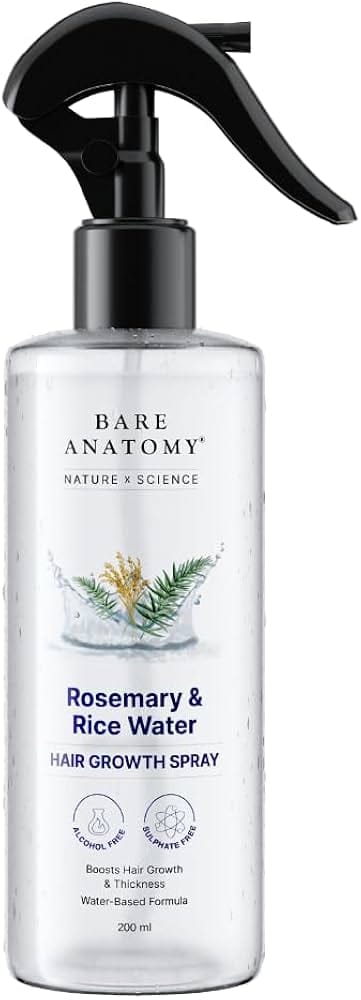
My Pick · Daily Scalp Support
Bare Anatomy Rosemary & Rice Water Spray
A gentler, daily complement to whatever treatment approach you choose. One spritz on the part line, no rinsing needed.
Check current price on Amazon →3. Scalp massage for circulation
A daily 5-minute scalp massage supports blood flow to follicles. It won't reverse hormonally-driven miniaturization on its own, but it's a genuinely useful, zero-cost addition to any routine.
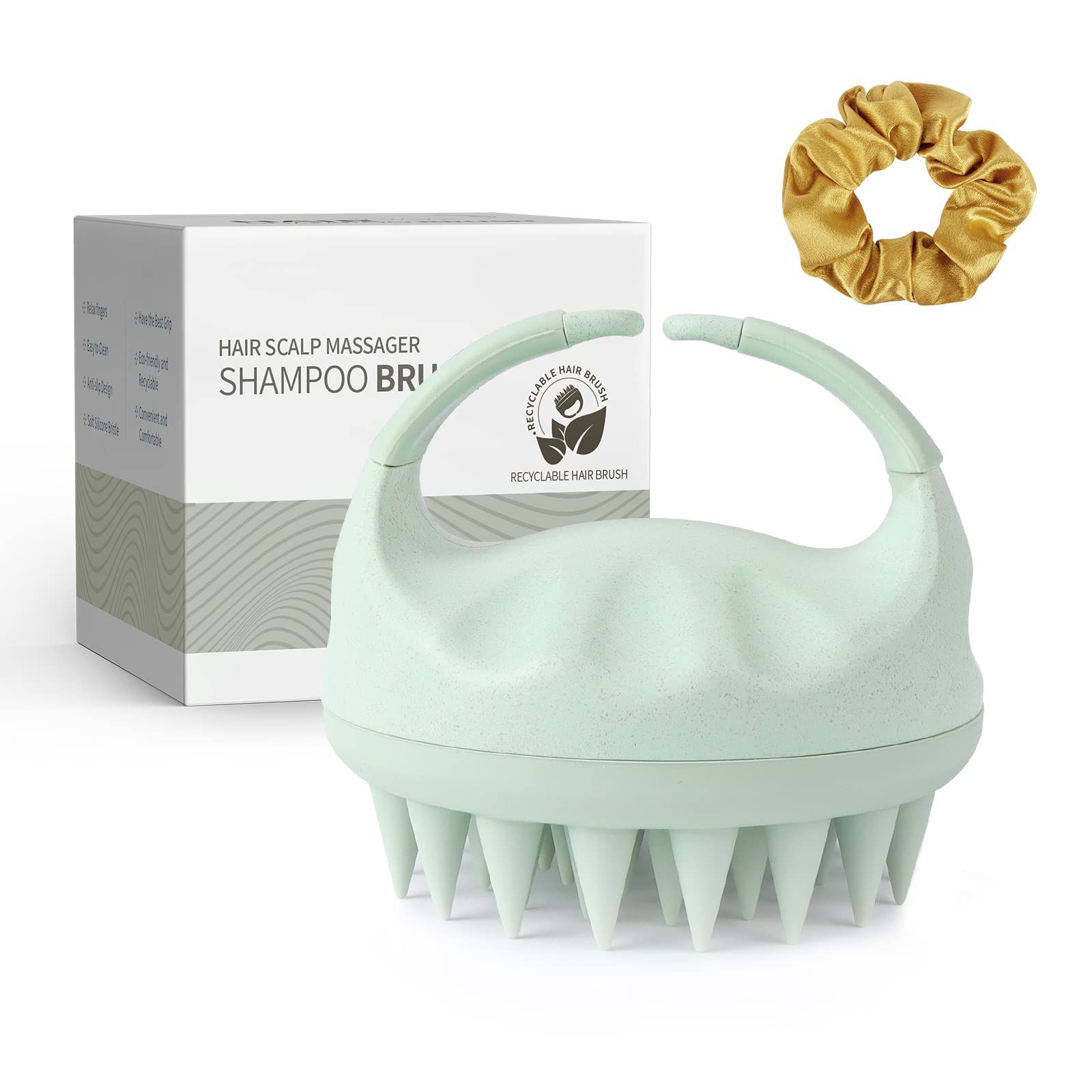
My Pick · Scalp Massager
Sndyi Silicone Scalp Massager
5 minutes daily, works wet or dry. Cheap, durable, and less finger fatigue than using your hands.
Check current price on Amazon →4. Reduce unnecessary mechanical damage
If any of your thinning is compounded by breakage (a common overlap, since fine, hormonally-thinning hair is also more fragile), reducing overnight friction matters more than it sounds like it should.

My Pick · Reduce Breakage
DKBslik Mulberry Silk Pillowcase
Less overnight friction means less breakage compounding whatever thinning is already happening.
Check current price on Amazon →When to See a Dermatologist
Worth a professional evaluation if:
- Thinning is sudden or dramatic rather than gradual
- You notice smooth, coin-shaped bald patches (rather than diffuse thinning)
- Hair loss is accompanied by other symptoms — fatigue, weight changes, cold intolerance
- Over-the-counter minoxidil hasn't shown any improvement after 6 months of consistent use
A dermatologist can run bloodwork to rule out thyroid issues or deficiencies, and can prescribe stronger treatments if needed — earlier intervention generally produces better outcomes with female pattern hair loss, since it's easier to preserve existing follicles than regrow fully miniaturized ones.
100% Free Download
The 30-Day Scalp Detox Checklist
Daily + weekly scalp care routine, printable, plus product picks for every step — delivered to your inbox.
Get the Free ChecklistSources
- UCLA Health — "What causes female hair loss?"
- Golden State Dermatology — "Hair Loss in Women"
- American Academy of Dermatology — hair loss statistics and treatment guidance
- Skinmed (2015) — Rosemary oil vs. minoxidil study
This article is for informational purposes only and does not replace a dermatologist's diagnosis or personalized medical advice. Product recommendations may contain affiliate links — I only recommend products I've researched and use.