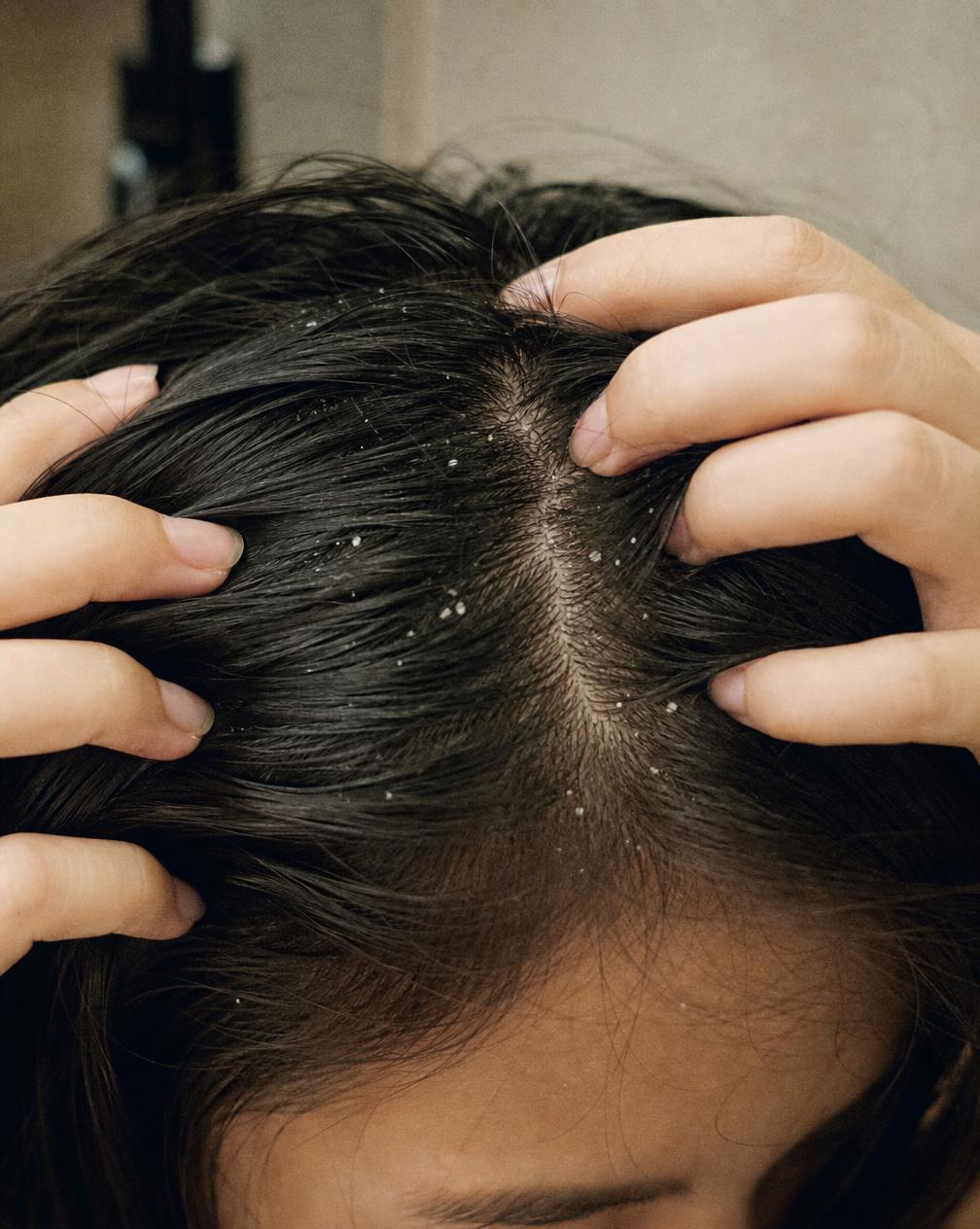
Flakes in your hair. An itchy, irritated scalp. Most people reach for the first "anti-dandruff" shampoo they see — but if what you actually have is a dry scalp, that shampoo can make things worse, not better. The two conditions look almost identical and need opposite treatments.
Here's how to actually tell them apart, and what dermatologists recommend for each.
The Core Difference
These two conditions have opposite root causes:
Dry Scalp
Caused by a lack of moisture in the skin — the same mechanism as dry skin anywhere else on your body. Not a medical diagnosis on its own; more like dry skin that happens to be on your head.
Dandruff
Caused by excess oil combined with overgrowth of Malassezia, a yeast that lives on everyone's skin. In some people it triggers inflammation and rapid skin cell turnover — which is what creates the flakes.
One is too little oil and moisture. The other is too much oil, feeding a yeast overgrowth. Treating dandruff like dry skin — or dry scalp like dandruff — is a common reason people feel stuck in a cycle of flakes that never fully clears up.
The 30-Second Test
Dermatologists use a version of this simple test, and you can do it at home tonight:
Before bed: apply a small amount of a light, unscented moisturizer directly to your scalp where the flaking is worst.
In the morning: check your scalp before washing.
If the flakes are gone or noticeably reduced → likely dry scalp, since you simply replaced the moisture it was missing.
If the flakes are still there, or look oily/yellowish → likely dandruff, since moisture wasn't the actual problem.
This isn't a formal medical test, but it's a genuinely useful first read on which direction to go before you buy anything.
Other Signs to Look For
Points to Dry Scalp
- Small, dry, powdery flakes
- Tight or itchy feeling, especially in cold weather
- Skin elsewhere on your body (arms, legs) is also dry
- Worse after switching to a harsher shampoo
Points to Dandruff
- Larger, oily, yellowish-white flakes
- Flakes visible even when hair looks greasy
- Redness or visible irritation on the scalp
- Worse with stress or hormonal changes
Free Download
The 30-Day Scalp Detox Checklist
A weekly routine that supports a balanced, healthy scalp either way.
Get the Free ChecklistIf It's Dry Scalp
The goal is restoring moisture without stripping the scalp further:
- Switch to a gentle, sulfate-free shampoo — sulfates are effective cleansers but strip natural oils aggressively
- Wash less often — a few times a week is usually enough; daily washing with a stripping shampoo makes dry scalp worse
- Use warm, not hot, water — hot water pulls moisture from skin
- Try a light natural oil — a small amount of coconut or jojoba oil, massaged in and left for 20-30 minutes before washing, can help restore moisture
- Stay hydrated and consider a humidifier — especially in dry climates or winter heating season
My Pick · Jojoba Oil
Handcraft Jojoba Oil (Cold-Pressed)
Closely resembles the scalp's own natural oils, so it absorbs without feeling heavy. Massage a small amount in and leave for 20-30 minutes before washing.
Check current price on Amazon →My Pick · Coconut Oil
Fractionated Coconut Oil
Stays liquid at room temperature, so it's easier to work through hair than solid coconut oil. Same pre-wash treatment approach as jojoba — a little goes a long way.
Check current price on Amazon →My Pick · Humidifier
DREO Ultrasonic Humidifier
Especially useful in winter, when indoor heating dries out both the air and your scalp. Adds moisture back into the environment your scalp sits in all day.
Check current price on Amazon →If It's Dandruff
The goal is controlling the underlying yeast and oil, not adding moisture:
- Use a medicated shampoo — look for ketoconazole, selenium sulfide, zinc pyrithione, or salicylic acid on the label
- Follow the instructions exactly — most medicated shampoos need to sit on the scalp for several minutes to work, not just rinse straight through
- Give it 2-3 weeks before judging whether it's working
- Manage stress — a known trigger for dandruff flare-ups
- Avoid heavy, oily styling products that can feed the problem
My Pick · Zinc Pyrithione
CeraVe Anti-Dandruff Shampoo with Pyrithione Zinc
Zinc pyrithione is one of the gentler medicated options — pairs it with niacinamide and hyaluronic acid, so it's less stripping than some anti-dandruff formulas. A reasonable first shampoo to try.
Check current price on Amazon →My Pick · Ketoconazole
Nizoral Anti-Dandruff Shampoo (Ketoconazole)
A stronger antifungal option if zinc pyrithione formulas haven't been enough. Ketoconazole directly targets the yeast overgrowth behind dandruff — leave it on for the full recommended time for best results.
Check current price on Amazon →A rosemary-based scalp spray can be a reasonable addition either way — it doesn't treat dandruff or dry scalp directly, but supporting overall scalp circulation and health is a sound complement to whichever targeted treatment you're using. Not a replacement for medicated shampoo if you genuinely have dandruff, though.
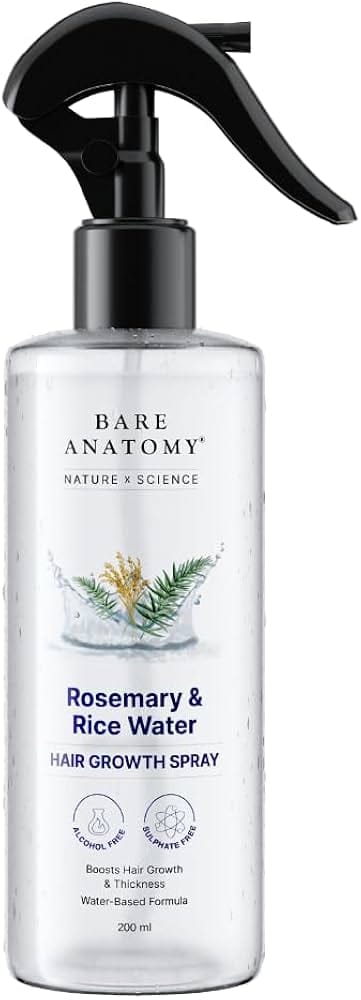
General Scalp Support
Bare Anatomy Rosemary & Rice Water Spray
Not a treatment for dandruff or dry scalp specifically — a general circulation-support addition to whichever targeted routine you're using.
Check current price on Amazon →When to See a Dermatologist
Both conditions are usually manageable at home. See a dermatologist if:
- Flaking doesn't improve after 2-3 weeks of consistent, correctly-matched treatment
- You notice significant redness, sores, or intense irritation
- Flaking is accompanied by noticeable hair loss
- Symptoms could be something else entirely — psoriasis, eczema, and seborrheic dermatitis (a more severe form of dandruff) can all look similar and need different treatment
There's no shame in needing a professional opinion here — a dermatologist can identify the exact cause in one visit, which can save months of guessing with the wrong products.
100% Free Download
The 30-Day Scalp Detox Checklist
Daily + weekly scalp care routine, printable, plus product picks for every step — delivered to your inbox.
Get the Free ChecklistSources
- Healthline — "Dandruff vs. Dry Scalp: What's the Difference?"
- NBC Select — dermatologist-reviewed guide, Dr. Alexandra Bowles, MONA Dermatology
- U.S. Dermatology Partners — "Dandruff vs Dry Scalp: The Difference, Causes, Prevention & Treatment"
- American Academy of Dermatology — general scalp condition guidance
This article is for informational purposes only and does not replace a dermatologist's diagnosis. Product recommendations may contain affiliate links — I only recommend products I've researched and use.