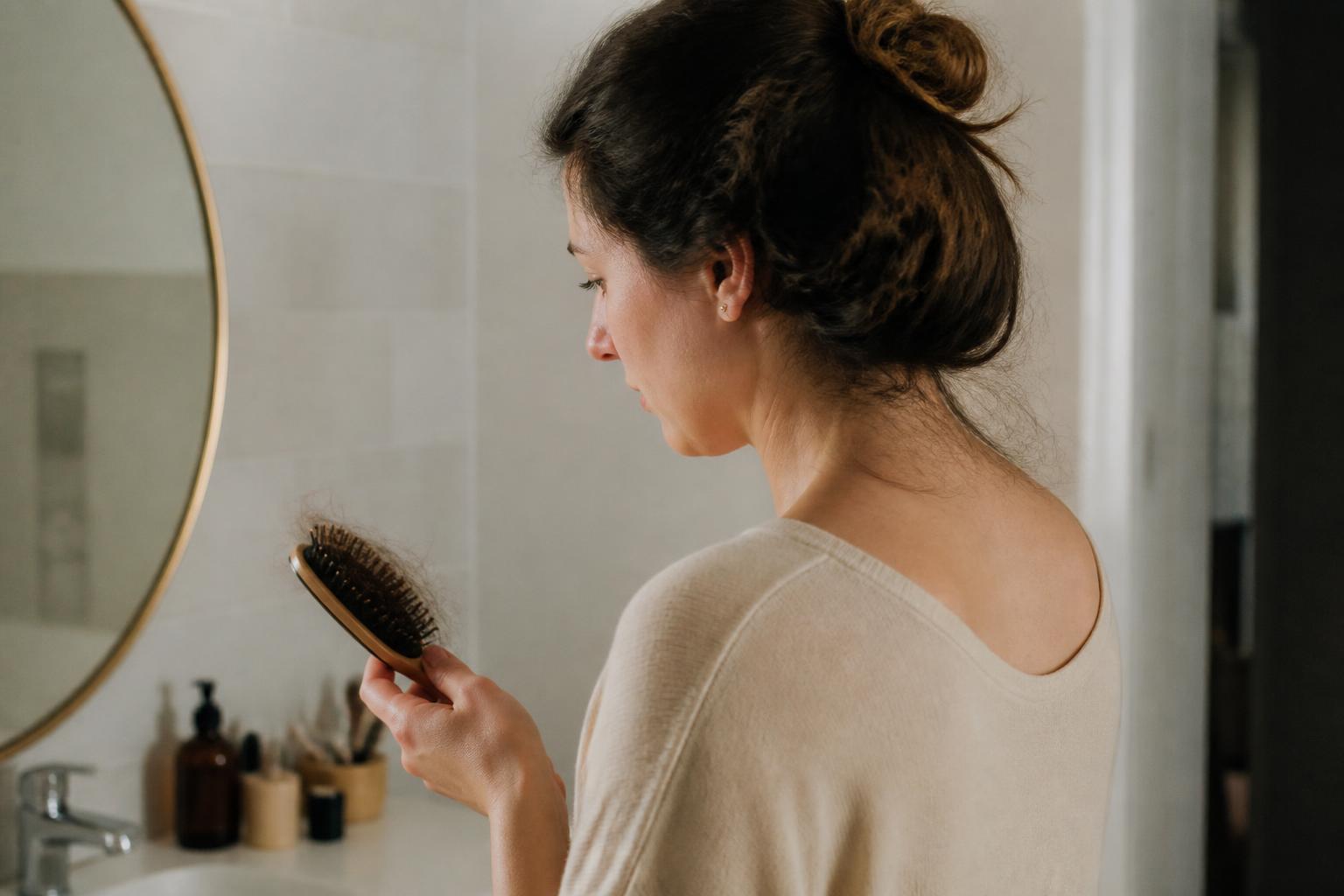
You're standing in the shower five months after giving birth, staring at a fistful of hair in your hand. It doesn't feel real. You had thick hair through the whole pregnancy. Now it's coming out in clumps every time you brush, wash, or barely touch it. You're wondering if this is normal, when it's going to stop, and whether your hair is going to grow back at all.
Short answer: yes, it's normal. Yes, it will stop. And in most cases, your hair grows back on a predictable timeline — one that dermatologists and OB-GYNs have been tracking for decades.
Here's what's actually happening, month by month, and what genuinely helps versus what's a waste of money.
What's Actually Happening in Your Scalp
The clinical name is postpartum telogen effluvium — a temporary, diffuse hair shedding condition triggered by the hormonal shift after childbirth.
During pregnancy, elevated estrogen keeps a much higher percentage of your hair in the anagen phase (active growth). Normally about 85–90% of scalp hair is in anagen at any given moment. During pregnancy, that percentage climbs higher — which is why so many pregnant women report the thickest, fullest hair of their lives.
After delivery, estrogen drops sharply. Within a few weeks, up to 30% of hair follicles shift into the telogen (resting) phase at roughly the same time — compared to the normal 10–15%. Two to four months later, those follicles all release their hair together.
That's the fistful in your hand.
For context: normal daily shedding is 50–100 hairs per day. During peak postpartum telogen effluvium, women can shed 100–300 hairs per day. That's the reason your shower drain looks alarming even though nothing is actually wrong.
The Month-by-Month Timeline
Individual patterns vary, but here's the pattern the American Academy of Dermatology, Johns Hopkins Medicine, and the Journal of Clinical and Aesthetic Dermatology consistently describe:
Months 0–2 postpartum
No shedding yet. Hair still feels normal, or even fuller than pre-pregnancy. This is the calm before.
Months 2–4 postpartum
Shedding begins. Slightly more hair in the brush at first, then it becomes obvious. Estrogen has dropped and follicles are all letting go together.
Months 3–4 postpartum
Peak shedding. This is when most women panic. Handfuls in the shower, hair on your pillow, hair everywhere. Knowing this is the worst point helps.
Months 5–6 postpartum
Shedding starts to slow. New hairs begin growing in — you may notice fine, wispy "baby hairs" around your hairline.
Months 6–12 postpartum
Regrowth phase. The fine new hairs get longer and thicker. By your baby's first birthday, most women have regained close to their pre-pregnancy hair density.
Breastfeeding note: Some women find shedding continues longer while breastfeeding, because hormonal shifts continue throughout lactation. This doesn't mean anything is wrong — it just extends the timeline.
When to Actually See a Dermatologist
Postpartum telogen effluvium is self-limiting and doesn't need medical treatment in most cases. But you should see a dermatologist if:
- Your hair hasn't regained normal fullness by your child's first birthday
- The shedding is patchy (a defined bald spot) rather than diffuse (thinning all over)
- You see any redness, scaling, or itching on the scalp
- You have other symptoms like fatigue, cold intolerance, or weight changes (could indicate a thyroid issue, which commonly co-occurs postpartum and independently causes hair loss)
If any of these apply, it's not "just postpartum hair loss" — get a proper evaluation.
Free Download
The 30-Day Scalp Detox Checklist
Room-by-room daily and weekly routine to support your scalp through postpartum recovery.
Get the Free ChecklistWhat Actually Helps (Ranked by Evidence)
1. Time and patience (the hardest and most effective)
The single biggest intervention is doing nothing that makes it worse and letting your body cycle back to normal. No product on earth can shorten the telogen effluvium timeline in a proven, measurable way. What products can do is protect the hair that's still there and support the regrowth phase.
2. Reduce mechanical stress on already-fragile hair
During peak shedding, every hair on your head is more vulnerable than usual. Anything that adds friction, tension, or breakage makes the visible thinning worse.
- Switch to a silk pillowcase. Cotton absorbs moisture from hair overnight and creates friction that increases breakage. Real mulberry silk reduces both — the easiest change with the biggest overnight impact.
- Skip tight ponytails, buns, and top-knots. Tension on fragile follicles can cause traction alopecia on top of the telogen effluvium.
- Detangle from the bottom up with a wide-tooth comb, gently. Never yank.
- Air-dry when possible. Heat styling on shedding hair creates more breakage.

My Pick · Silk Pillowcase
DKBslik Mulberry Silk Pillowcase
100% mulberry silk, 22 momme weight. Machine washable. The one I use daily.
Check current price on Amazon →3. Gentle scalp stimulation
Scalp massage doesn't stop telogen effluvium, but it does support blood flow to follicles during the regrowth phase. A 5-minute daily scalp massage using your fingertips (or a silicone massager) increases microcirculation and can genuinely support the "new baby hairs" that start emerging around month 5–6.
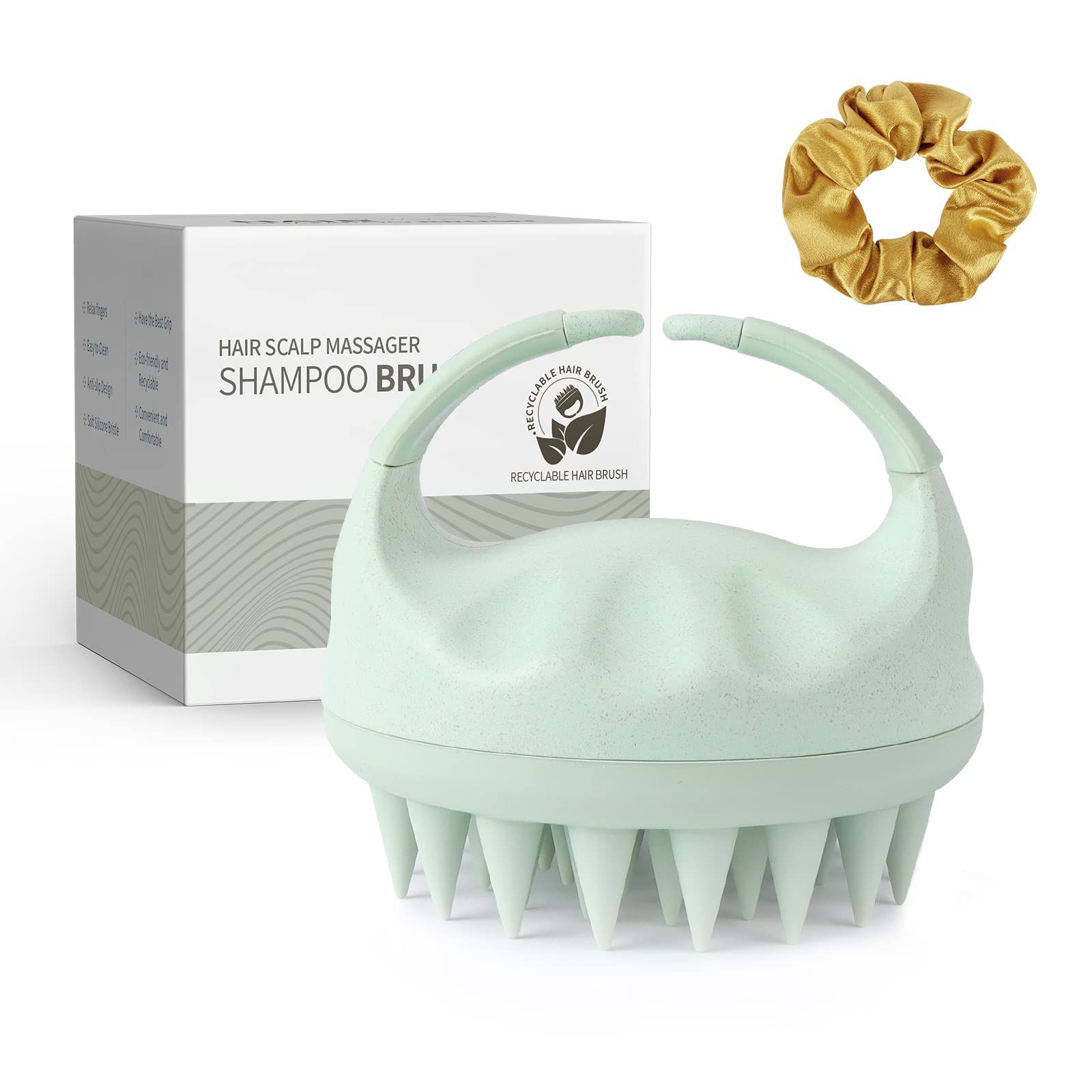
My Pick · Scalp Massager
Sndyi Silicone Scalp Massager
Works wet or dry. Less finger fatigue than using your hands. Cheap and durable.
Check current price on Amazon →4. Nutrition matters, especially if breastfeeding
Your body prioritizes nutrients for milk production over hair growth. Common postpartum deficiencies that affect hair:
- Iron / ferritin: postpartum women are often iron-depleted, and low ferritin is a well-documented cause of hair shedding
- Vitamin D: commonly low in mothers who spend most of their time indoors with a newborn
- Protein: hair is made of keratin, which is protein — inadequate intake extends recovery
Continue your prenatal vitamin through the first postpartum year, especially while breastfeeding. Talk to your OB or GP about testing ferritin and vitamin D if shedding is severe or prolonged.
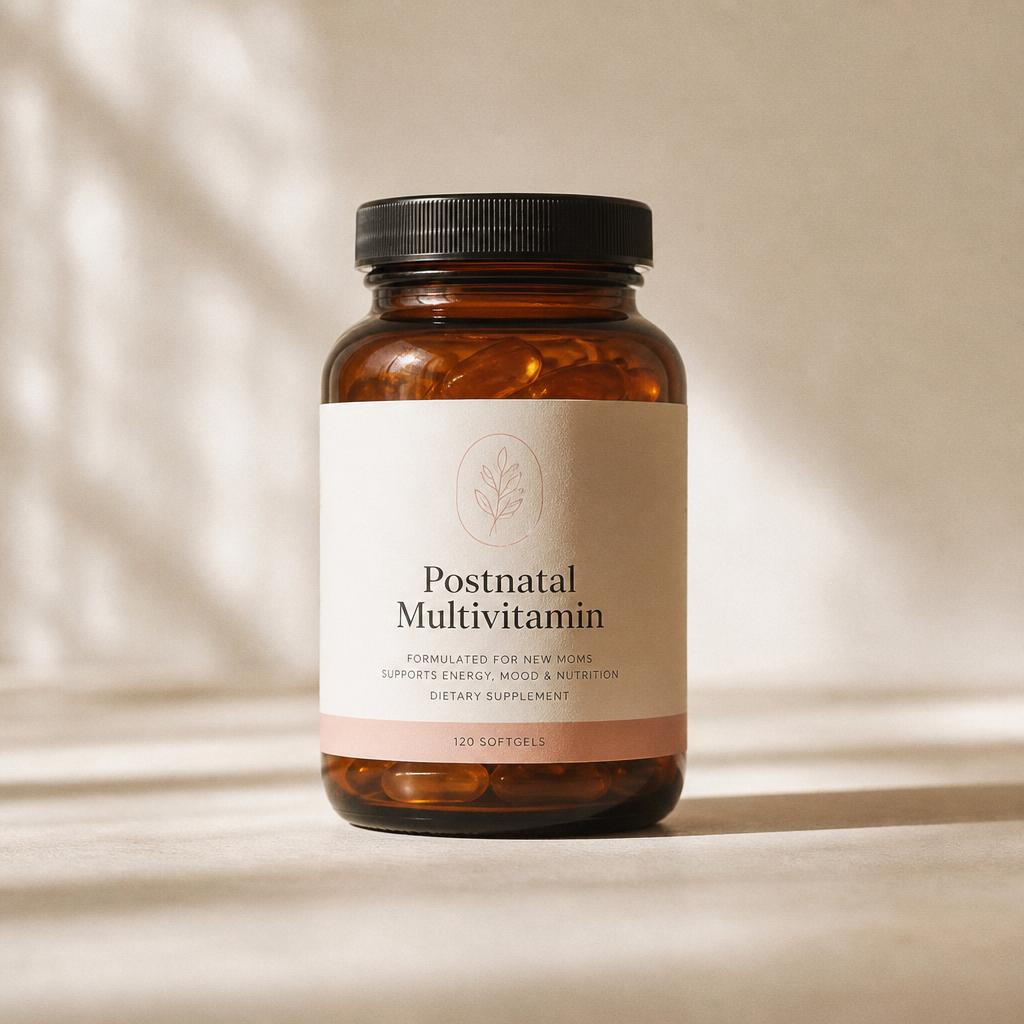
My Pick · Postnatal Multivitamin
Nature Made Postnatal Multivitamin Softgels
Covers the daily baseline — iron, vitamin D, and the other nutrients most postpartum diets fall short on. Not a hair-growth product on its own, but the foundation that makes everything else work.
Check current price on Amazon →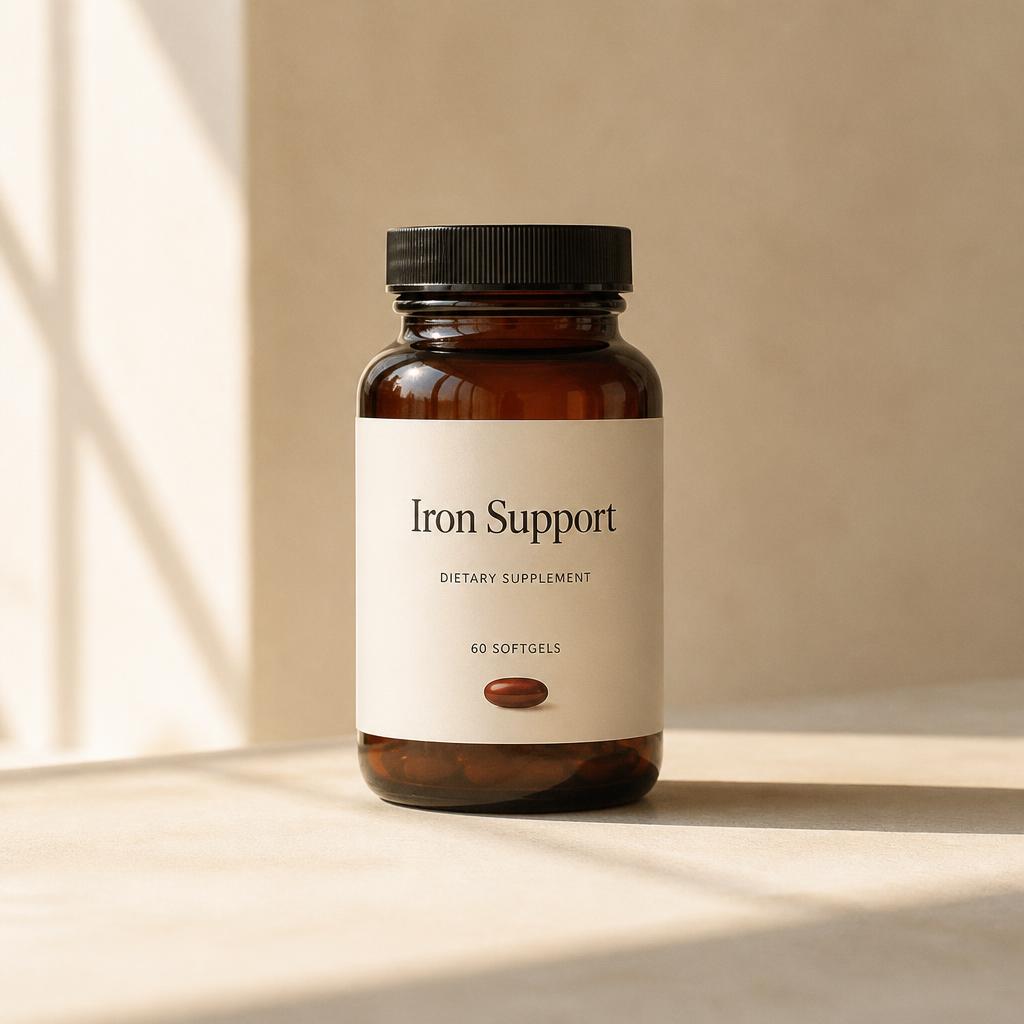
My Pick · Iron Support
Postnatal Complete Multivitamin with Omega-3
Worth considering if a ferritin test comes back low — talk to your doctor first, since iron needs vary a lot person to person and too much iron isn't a fix-it-yourself situation.
Check current price on Amazon →
My Pick · Protein Support
Mommy's Bliss Postnatal Collagen
Hair is keratin, and keratin is protein — collagen is an easy way to round out protein intake on the days a full meal doesn't happen. A supplement, not a substitute for real food.
Check current price on Amazon →This one also contains a small amount of biotin — if you're wondering whether that's the reason to take it, here's what the actual research says about biotin for hair growth.
Always talk to your OB-GYN or doctor before starting any new supplement, especially iron — too much can be harmful, and your actual needs depend on your bloodwork.
5. Topical support for the regrowth phase
Once you're past peak shedding (usually month 5+), topical scalp treatments can support the new growth phase. Rosemary-based sprays are the most studied natural option — a 2015 study in Skinmed found 2% rosemary oil comparable to 2% minoxidil for androgenetic alopecia after 6 months.
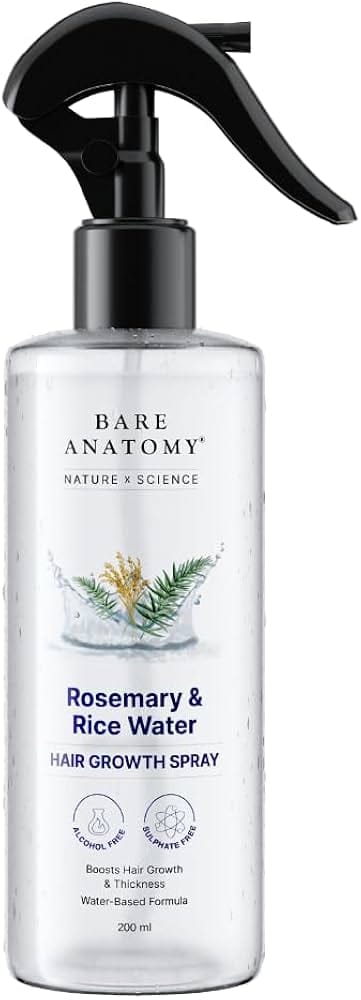
My Pick · Rosemary Spray
Bare Anatomy Rosemary & Rice Water Spray
One spritz on the part line daily. No rinsing needed. Gentle enough for the regrowth phase.
Check current price on Amazon →What Does NOT Help (Save Your Money)
- Ketoconazole shampoos — not shown to help telogen effluvium (they're for dandruff/seborrheic dermatitis).
- Minoxidil (Rogaine) — technically works, but not recommended while breastfeeding, and shedding usually resolves before you'd see results.
- Cutting your hair — doesn't reduce shedding (hair sheds from the root, not the tip). Just makes the shedding look less dramatic in the drain.
The One Message Every Postpartum Mom Needs
You are not losing your hair permanently. You are going through a well-documented, predictable, temporary process that affects most postpartum mothers. Peak shedding lasts 6–8 weeks. Recovery takes 6–12 months. Your body is doing exactly what it's supposed to do.
The best things you can do right now: protect the hair you have from breakage, support blood flow to follicles, and be patient. That's it.
100% Free Download
The 30-Day Scalp Detox Checklist
Daily + weekly scalp care routine, printable, plus product picks for every step — delivered to your inbox.
Get the Free ChecklistSources
- American Academy of Dermatology — Hair Loss in New Moms
- Johns Hopkins Medicine — Postpartum Hair Loss
- Journal of Clinical and Aesthetic Dermatology — "Postpartum Telogen Effluvium" (Vol. 17, No. 5)
- Skinmed (2015) — Rosemary oil vs. minoxidil study
- Trichovita Clinical Trichology — postpartum recovery timeline data
This article is for informational purposes and does not replace personalized advice from your OB-GYN, dermatologist, or physician. Product recommendations may contain affiliate links — I only recommend products I've researched and use.